
Products & Services
VEROQ – HEALING THE PLANET

Biochar (Coming Soon)
Biochar is a carbon-rich material produced through the pyrolysis process, where organic biomass is heated in a low-oxygen environment. This process stabilizes carbon, preventing it from being released as greenhouse gases while enhancing soil health and productivity. Biochar has been widely recognized for its role in carbon sequestration, soil improvement, and sustainable agriculture.
- Benefits
- Carbon Sequestration: Locks away carbon for centuries, reducing greenhouse gas emissions.
- Soil Enhancement: Improves soil fertility, aeration, and water retention.
- Nutrient Retention: Helps retain essential nutrients, reducing the need for chemical fertilizers.
- Supports Microbial Life: Encourages beneficial soil microbes, improving plant growth and resilience.
- Pollution Reduction: Can filter toxins, heavy metals, and contaminants from soil and water.
- Uses
- Agriculture: Mixed into soil to improve fertility, water retention, and microbial activity.
- Livestock Farming: Used as a feed additive to improve digestion and reduce methane emissions.
- Composting: Enhances compost quality by stabilizing nutrients and reducing odors.
- Wastewater Treatment: Utilized as a natural filter for removing pollutants from water.
- Industrial Applications: Used in construction materials, carbon-based filters, and energy storage.
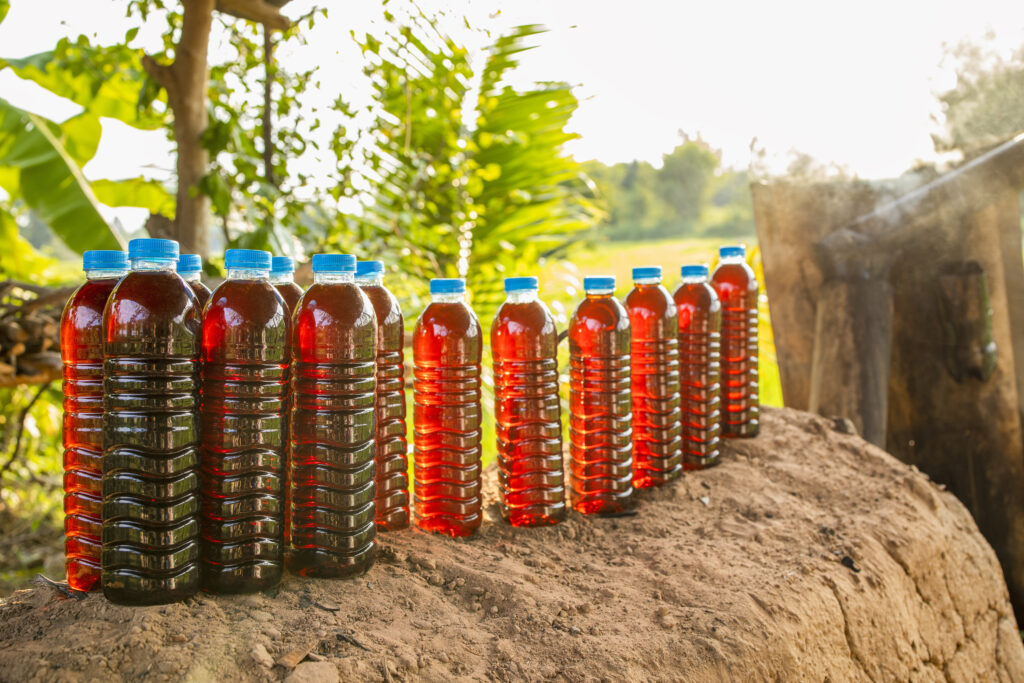
Wood Vinegar (Coming Soon)
Wood vinegar, also known as pyroligneous acid, is a natural byproduct of the pyrolysis process, produced when organic biomass is heated in a low-oxygen environment. This liquid contains a rich blend of organic compounds, including acetic acid, methanol, and phenols, making it a valuable resource for agricultural and industrial applications. With its natural antimicrobial and growth-promoting properties, wood vinegar has been widely used in sustainable farming and environmental management.
- Benefits
- Enhances Plant Growth: Stimulates root development and improves nutrient uptake in crops.
- Natural Pest Repellent: Acts as an organic alternative to chemical pesticides.
- Improves Soil Health: Encourages beneficial microbial activity and reduces soil-borne diseases.
- Boosts Composting Efficiency: Accelerates the decomposition process and improves compost quality.
- Reduces Odors & Ammonia Emissions: Helps control unpleasant smells in agricultural and livestock environments.
- Uses
- Agriculture: Applied as a natural fertilizer, growth stimulant, and pest repellent.
- Animal Husbandry: Used to control odors and enhance livestock health when mixed with feed or sprayed in barns.
- Composting: Added to compost piles to speed up decomposition and improve microbial activity.
- Wastewater Treatment: Utilized for its ability to break down harmful substances and purify water.
- Industrial Applications: Used in charcoal production, as a natural preservative, and in organic cosmetics.

Carbon Credits (Coming Soon)
Carbon credits are a market-based mechanism designed to reduce greenhouse gas emissions by incentivizing businesses and organizations to lower their carbon footprint. One carbon credit represents one metric ton of carbon dioxide (CO2) or an equivalent amount of another greenhouse gas that has been removed from or prevented from entering the atmosphere. Companies that exceed their emission limits can purchase credits from projects that actively reduce or sequester carbon, such as renewable energy initiatives, reforestation programs, and biochar production.
Carbon credits that undergo a transparent accreditation process are often more valuable in the marketplace, as they provide verifiable proof of impact. Accredited credits can command higher financial returns compared to non-accredited ones, as buyers seek assurance that their investment contributes to genuine emissions reductions.
- Benefits
- Reduces Greenhouse Gas Emissions: Encourages businesses to lower their carbon footprint by offsetting emissions.
- Supports Sustainable Projects: Provides funding for renewable energy, forest conservation, and carbon sequestration efforts.
- Encourages Corporate Responsibility: Promotes sustainability commitments and enhances environmental credibility.
- Drives Innovation: Incentivizes the development of cleaner technologies and eco-friendly business models.
- Creates Economic Opportunities: Generates revenue for carbon reduction projects while supporting global sustainability goals.
- Uses
- Corporate Carbon Offsetting: Businesses purchase credits to balance their emissions and meet regulatory or voluntary sustainability targets.
- Renewable Energy Development: Supports wind, solar, and hydroelectric power projects that replace fossil fuel dependence.
- Reforestation & Conservation: Funds tree-planting and forest preservation efforts to absorb CO2 from the atmosphere.
- Industrial Emission Reduction: Encourages heavy industries to adopt cleaner technologies and operational efficiencies.
- Sustainable Agriculture: Incentivizes practices such as biochar production and regenerative farming that capture and store carbon.